
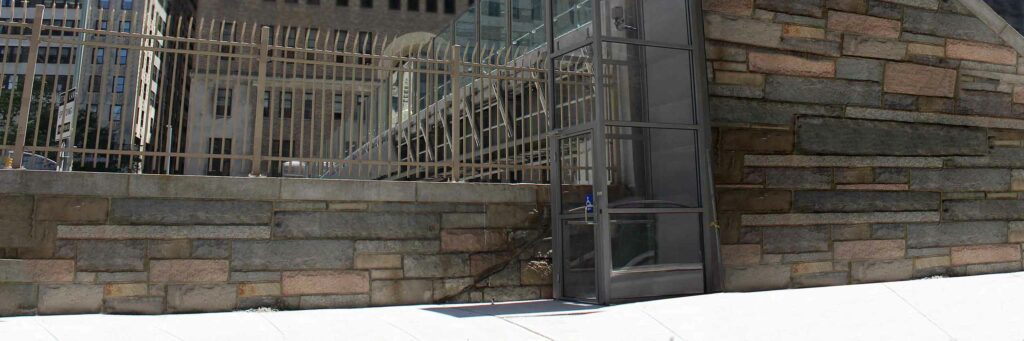
Before You Build: What to Know About Outdoor Wheelchair Lifts
An outdoor lift has to perform in whatever conditions the environment brings. Outdoor-rated lifts may include weather-resistant electrical components, corrosion-resistant materials, or cold-weather hydraulic fluid.
Spaces with a canopy or roof overhang are considered outdoor installations. Wind-driven rain, humidity, dust, and temperature changes can still affect their long-term performance.
Plan for Changing Seasons and Year-Round Performance
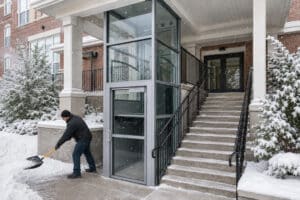 An outdoor lift faces the elements every day. Choose an outdoor-rated lift that is designed to handle moisture, salt air, and other conditions that can damage finishes, hardware, and electrical components. In colder climates, think about snow removal and how to prevent ice from accumulating around the platform and landings. In hotter climates, consider how direct sunlight, dust, and UV exposure may affect lift placement or create a need for added protection.
To ensure reliable accessibility for years to come, building owners should perform routine maintenance and schedule regular inspections.
Plan for Water Before You Pour Concrete
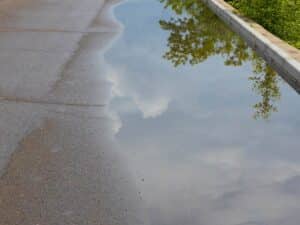
Before pouring the foundation, consider how water moves across the site. Roof runoff, irrigation, snowmelt, and natural drainage patterns can all direct water toward the lift. Include drainage in the overall site design and coordinate the plan with the project team.
Plan for Compliance
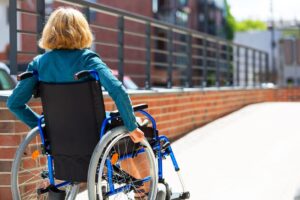 Outdoor platform lifts must meet applicable accessibility, safety, and local code requirements. Depending on the project, these may include ADA requirements, ASME A18.1, accessible means of egress, and state or local codes. Because jurisdictions adopt and enforce codes differently, involve the project team and Authority Having Jurisdiction (AHJ) early when reviewing the lift configuration.
Learn more:
Ascension Wheelchair Lifts for Outdoor Installations
The Ascension Clarity and Protégé models work within the constraints of your outdoor project while creating beautiful, accessible spaces. This table compares their capabilities and highlights where each model works best.
| Features | Clarity | Protégé |
|---|---|---|
| Enclosed travel up to 168 inches | X | |
| Variable heights accommodate diverse site conditions. | X |
|
| Ramp-less, finished floor entry with self- supporting lift mechanism and compact footprint. | X | X |
| Tall, narrow spaces such as balconies and mezzanines. | X | |
| Shorter elevations like platforms and stages. | X |
|
| Portable use for outdoor events. | X |
|
| Available Outdoor Use package for all-weather durability. | X | X |
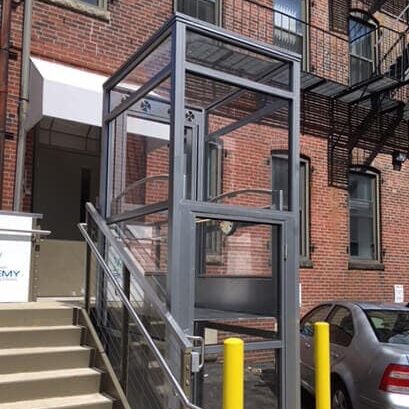
When to Consider the Clarity
The Clarity’s open, modern design provides accessibility without visual weight. Its lifting mechanism does not require an adjacent supporting wall, which can simplify outdoor installations where a traditional lift tower is difficult to accommodate.
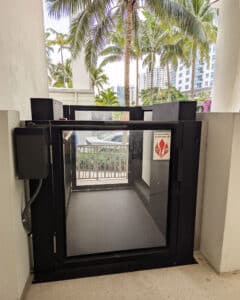
When to Consider the Protégé
The Protégé’s portable configuration makes it a versatile choice for outdoor events. Its 900 pound lifting capacity makes it a powerhouse across a wide range of commercial, institutional, and public applications.
Get Help from a Lift Specialist
We can help you review the site, consider outdoor conditions, and determine which configuration makes the most sense for your project. Whether you’re an architect working through the design or a building owner trying to understand your options, our team can help you identify what to consider before moving forward.
Related Case Studies
-
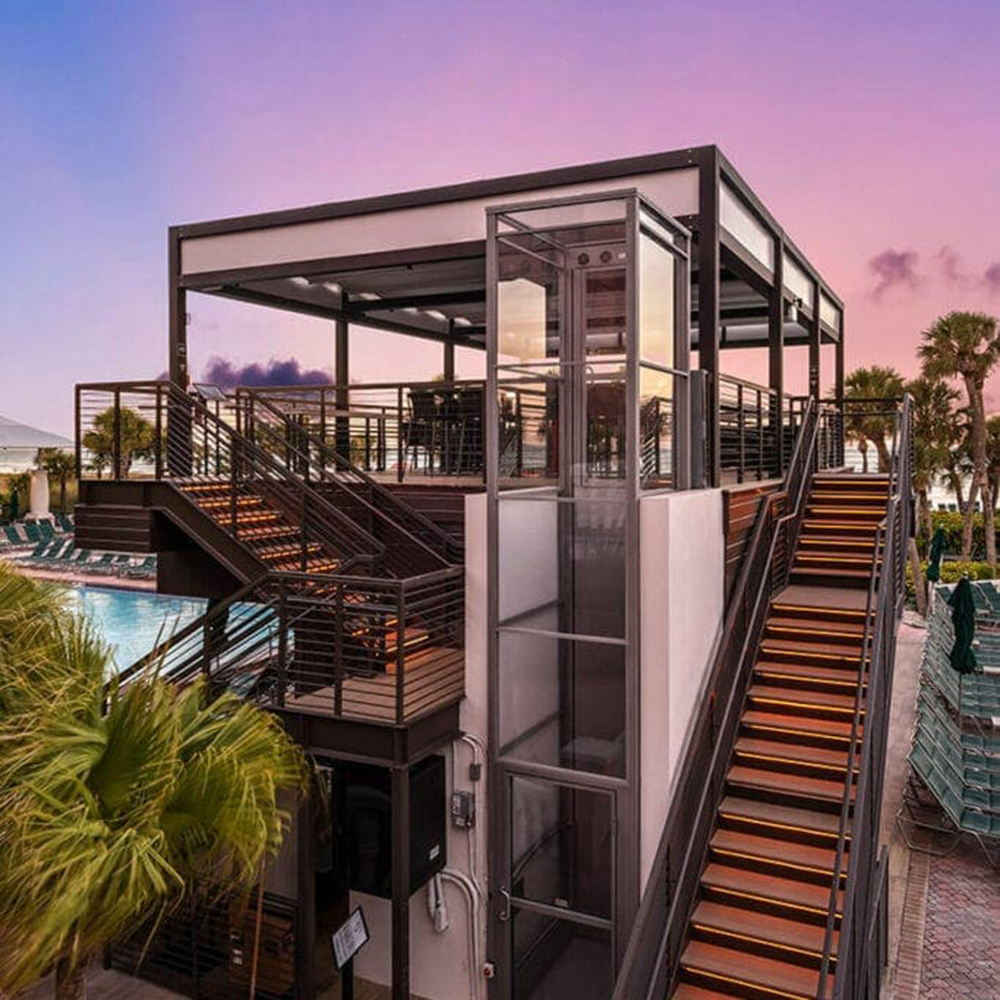
The Don CeSar
The Don CeSar, a luxury resort located on Florida’s St. Pete Beach, used an Ascension Clarity wheelchair lift to make a second-story poolside lounge ADA accessible. -
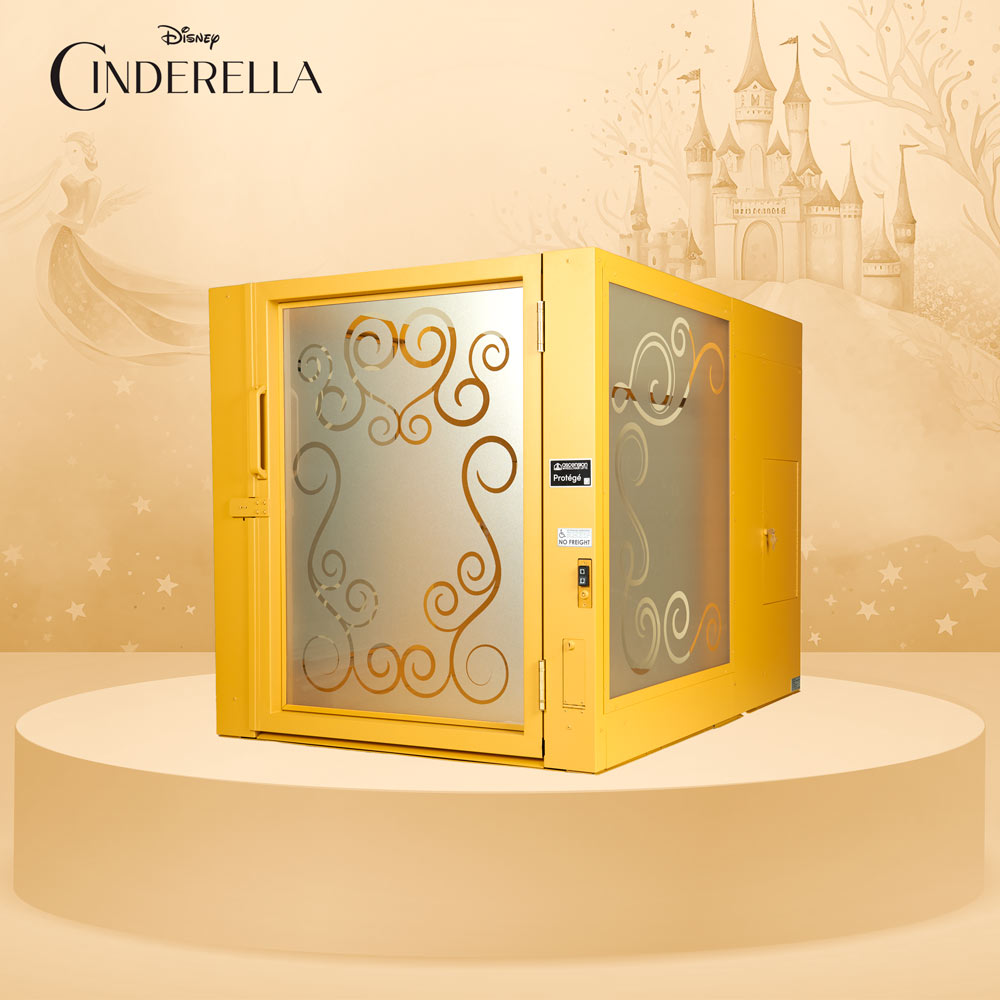
Disneyland Cinderella Carriage
Disneyland Parks needed a creative accessibility solution for Cinderella's carriage and Ascension delivered a custom Protégé wheelchair lift.