
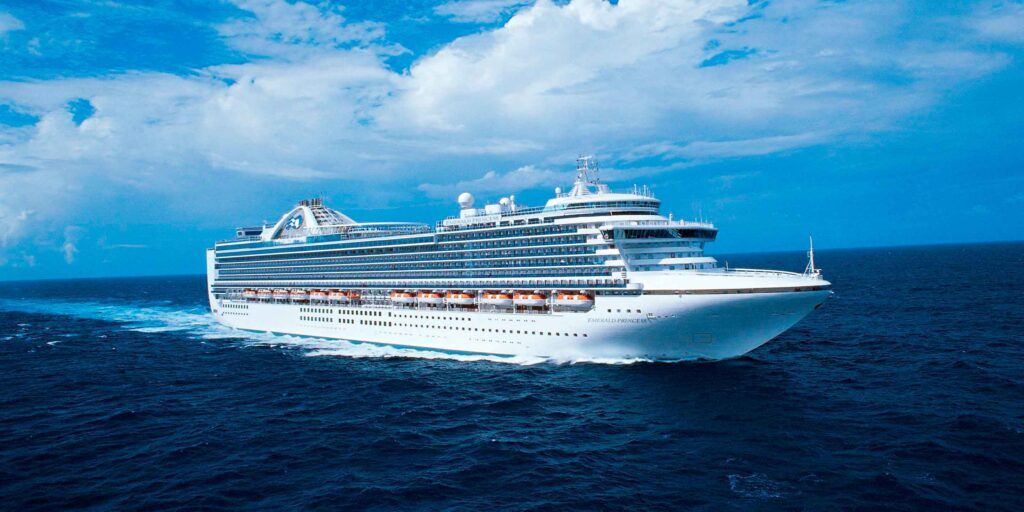
Case Studies for Ascension Wheelchair Lifts: Cruise Ships
Cruise ships are designed around experiences. Theaters and entertainment venues, restaurants, lounges, and other public spaces all contribute to the passenger’s journey. Some important points to consider as you think about ship-board accessibility:
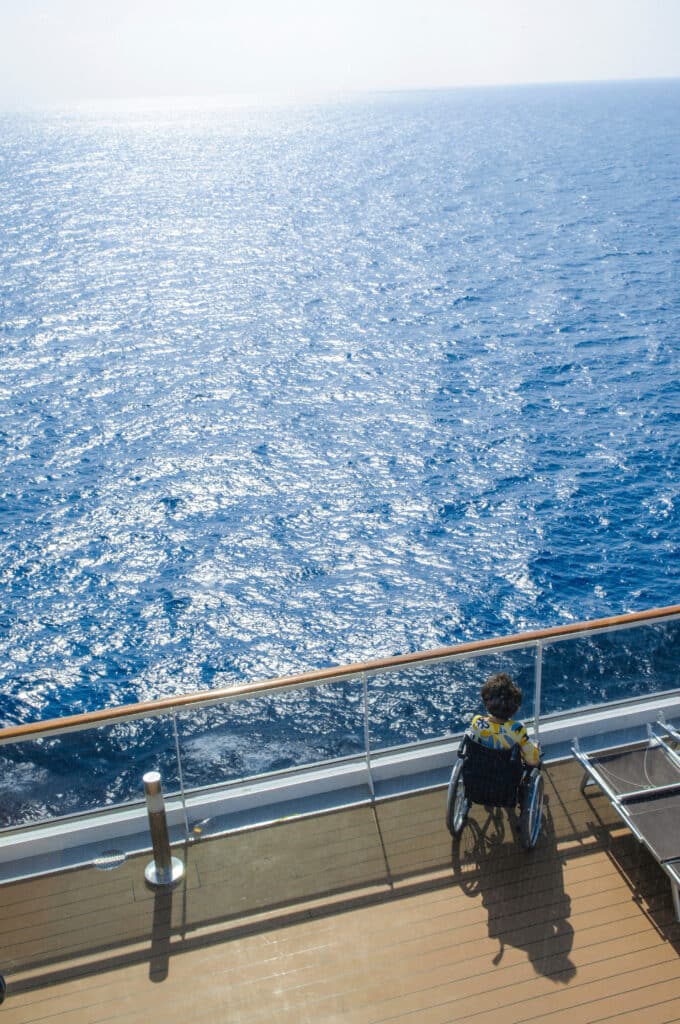
- Research from the Open Doors Organization in 2024 found that 5.1 million U.S. adults with disabilities took cruises between 2020 and 2024. This accounts for 10.3 million cruise trips, an estimated $18.5 billion in cruise-fare spending, and $3.1 billion in excursion spending.
- Cruising is very attractive to travelers with accessibility needs. According to the Cruise Lines International Association (CLIA), more than 80% of travelers with mobility, sensory, neurological or cognitive challenges rate cruising as the best vacation option for them.
- According to a 2025 CLIA report, 34% of global cruise passengers were over age 60; the average age of a passenger was 46.7. Passengers who do not normally use a wheelchair may use accessibility devices on a cruise due to the unusual amount of activity or to temporary injuries.
When you design accessible spaces you create a more comfortable and inclusive experience for a broad range of guests. But when you are designing for a ship, you have to work within unique constraints: limited space, carefully curated environments, and multi-purpose spaces.
Make the most of limited space
Space aboard a cruise ship is valuable. Adding a long permanent ramp to reach a stage or other elevated area uses floor space that could otherwise be used for guest seating, amenities, or just circulation.
A wheelchair lift provides vertical access in a much smaller footprint. Ascension lifts are designed to minimize the space needed around the lift as well. Pit-less and ramp-less configurations eliminate the need for additional excavation or approach ramps, making them particularly well suited to spaces where every inch matters.
Make accessibility part of the experience
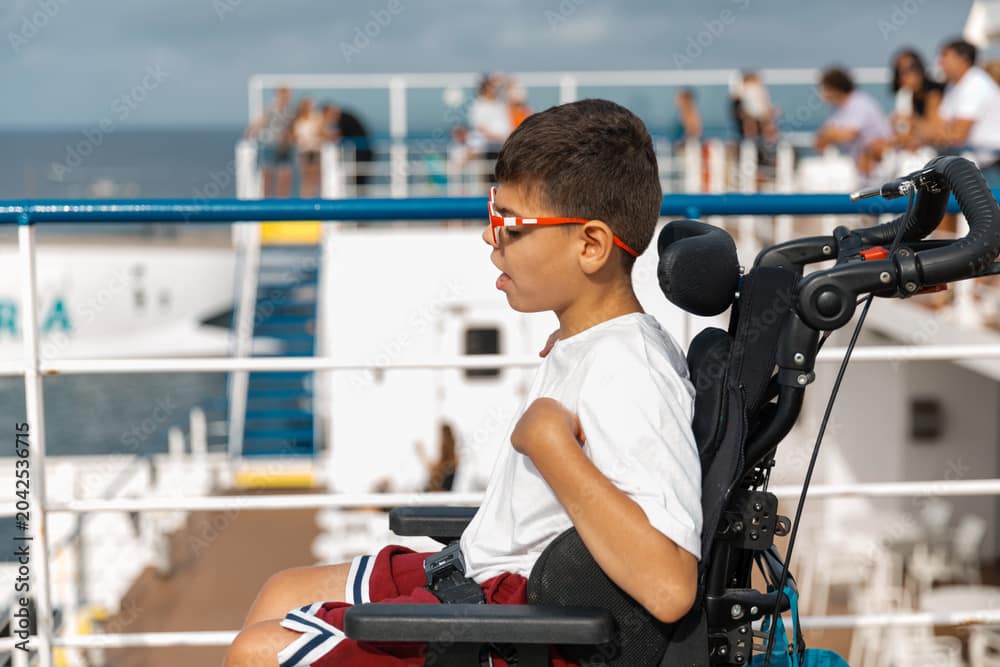 Cruising is an immersive experience, and the design of the ship is an important part of that experience. An accessibility solution in a theater, lounge, or other highly visible passenger area should complement that environment, not feel like an afterthought.
Ascension wheelchair lifts can be customized to become part of the space around them. Colors, finishes and other design elements can coordinate with the surrounding environment.
More than 80% of travelers with mobility, sensory, neurological, or cognitive challenges rate cruising as the best vacation option for them.
Cruise trade association
Adapt to spaces that change
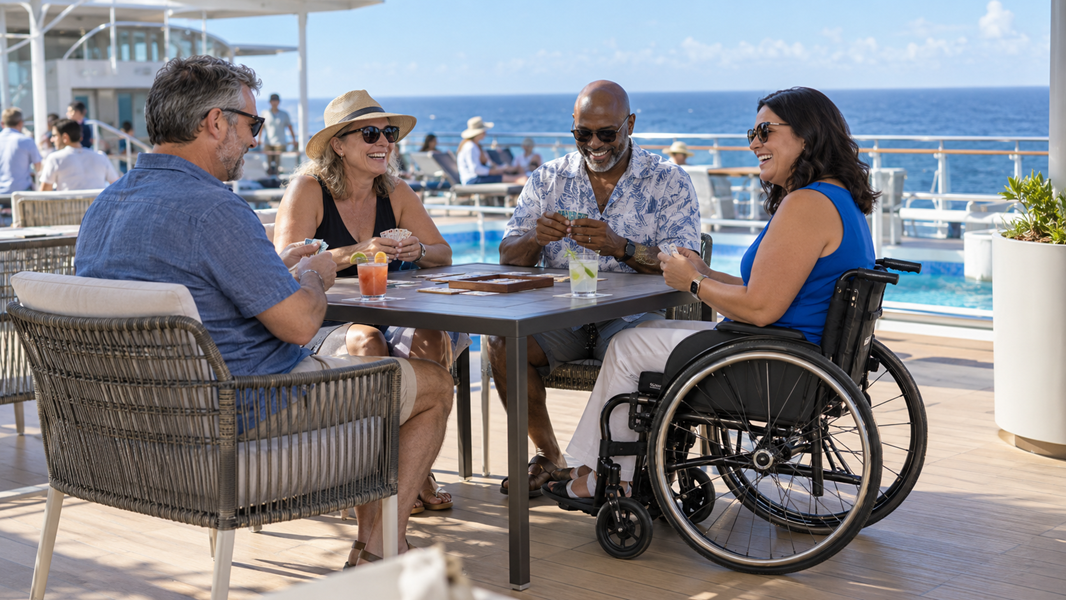 Cruise ship spaces are often multi-purpose. Theaters, stages, and entertainment venues may be reconfigured for different performances and activities, and ships themselves undergo renovations as passenger experiences evolve. Portable wheelchair lifts give cruise operators greater flexibility in these environments. A lift can be stored when it isn’t needed and moved to different locations rather than equipping every elevated area with its own permanent solution.
That flexibility can also be valuable during renovations. Incorporating accessible vertical travel into an existing space may be possible without the extensive structural changes that a ramp or conventional elevator could require.
Accessibility without compromise
For cruise lines, accessibility is more than a compliance consideration. It helps ensure that more passengers can participate fully in everything a ship has to offer. Ascension wheelchair lifts give cruise lines practical options for meeting these diverse needs by combining a small footprint, flexible installation options, portability, and customization.
Our Cruise Industry Partners



Related Case Studies
-
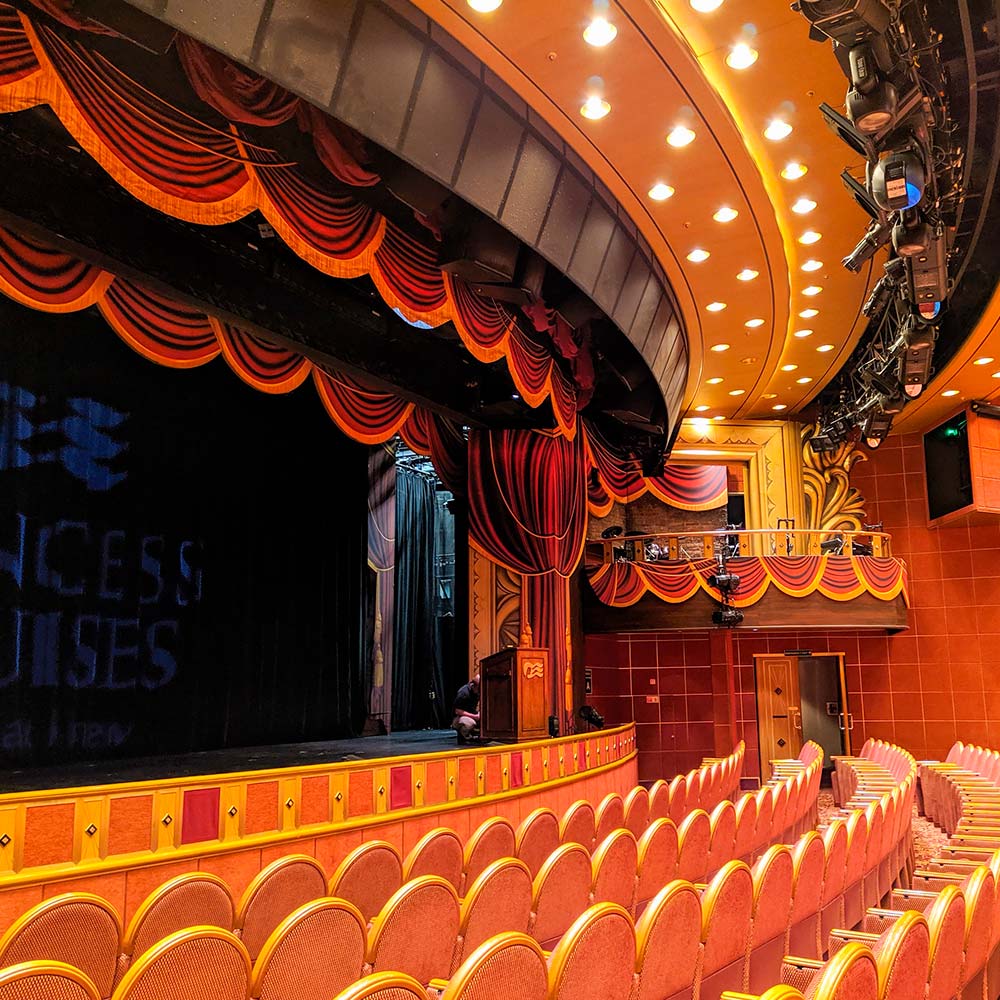
Emerald Princess
The Emerald Princess, a luxury ship operated by Princess Cruise Lines, uses a customized Ascension Protégé lift to make the stage in their new theater ADA accessible.