
Case Studies for Ascension Wheelchair Lifts: Stadiums and Athletic Centers
Stadiums and athletic centers bring people together for shared experiences, including sporting events, concerts, special events, and celebrations. Accessibility allows fans with disabilities to participate in those experiences alongside everyone else.
That means thinking beyond entrances and designated seating and thinking about every aspect of the experience: accessible routes, premium spaces, amenities, and different levels of the venue. All of these things make the difference between attending an event and fully experiencing an event.
Make the whole fan experience accessible
The U.S. Department of Justice emphasizes that wheelchair seating in stadiums should provide choices of locations, admission prices, and views comparable to those available to the general public. Accessible seating should also be integrated so wheelchair users aren’t isolated from friends, family or other spectators.
That expectation extends to premium experiences. ADA Standards require wheelchair spaces in each luxury box, club box and suite within arenas, stadiums and grandstands.
Providing those spaces is only part of the equation. Fans also need an accessible way to reach them. Accessibility shouldn’t end where the premium experience begins.
Connect fans to every level
Stadiums are inherently multilevel environments, with seating areas, suites, clubs, concourses and other experiences located at different elevations. The Department of Justice guidance on stadiums emphasizes the importance of accessible routes that allow people with disabilities to travel throughout the venue.
Ascension wheelchair lifts provide compact vertical access where a long ramp or conventional elevator may not be practical. Small footprints, pit-less configurations and multiple lift designs provide flexibility for working within existing venue layouts as well as new construction.
Make accessibility part of the venue
Sports venues have some of the strongest visual identities of any public space. Architecture, team colors, graphics, and premium environments all contribute to the experience.
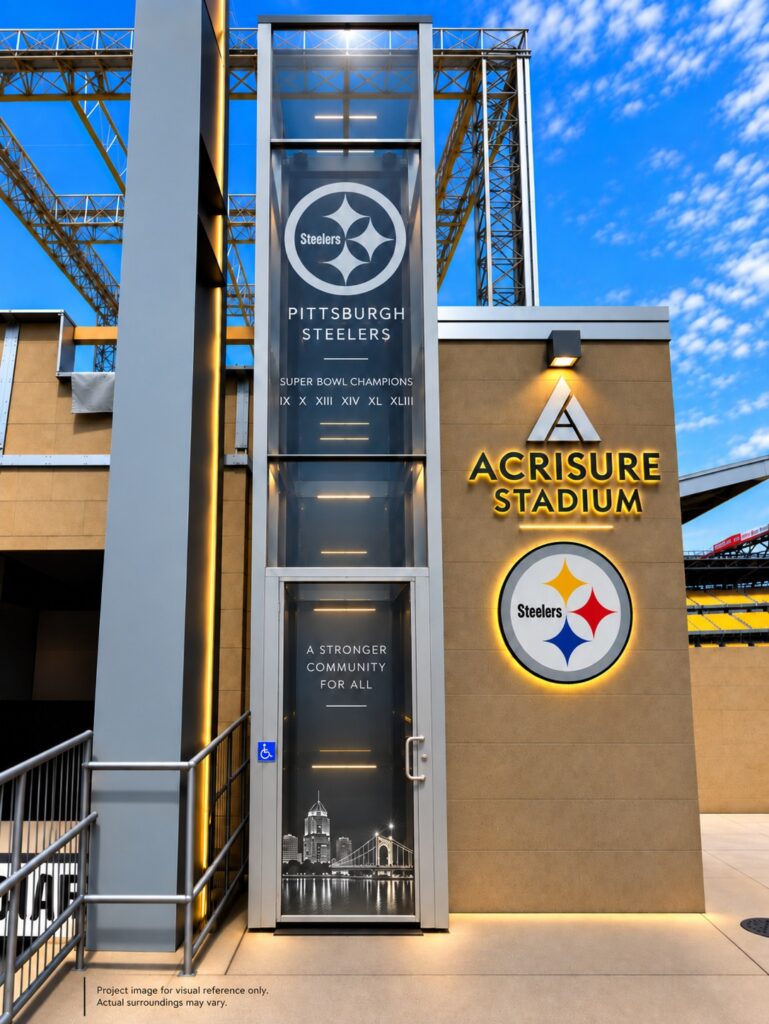
Accessibility equipment can be part of that environment, too. Ascension wheelchair lifts can be customized with colors, glass and hardware to complement their surroundings, and different configurations provide additional flexibility for integrating a lift into the architecture. At Allegiant Stadium, for example, Ascension developed a shaftway lift solution with custom doors and Raiders graphics, allowing the lift to become part of the venue rather than looking like equipment added after the fact.
Built for the demands of game day
Stadiums are demanding environments. Whatever accessibility solution you choose has to contend with large crowds, frequent events, changing venue configurations, and possible exposure to the elements.
Ascension offers fixed and portable wheelchair lifts, outdoor configurations and customization options that allow each lift to be designed around the needs of the venue. Whether providing access to premium seating, connecting different levels, or adapting an existing facility, the goal is the same: make more of the experience available to more people.
Modern stadium accessibility isn’t defined by one seat, ramp, or lift. It’s a combination or system of choices that allows fans with different needs to participate fully in the event they came to experience.
Related Case Studies
-
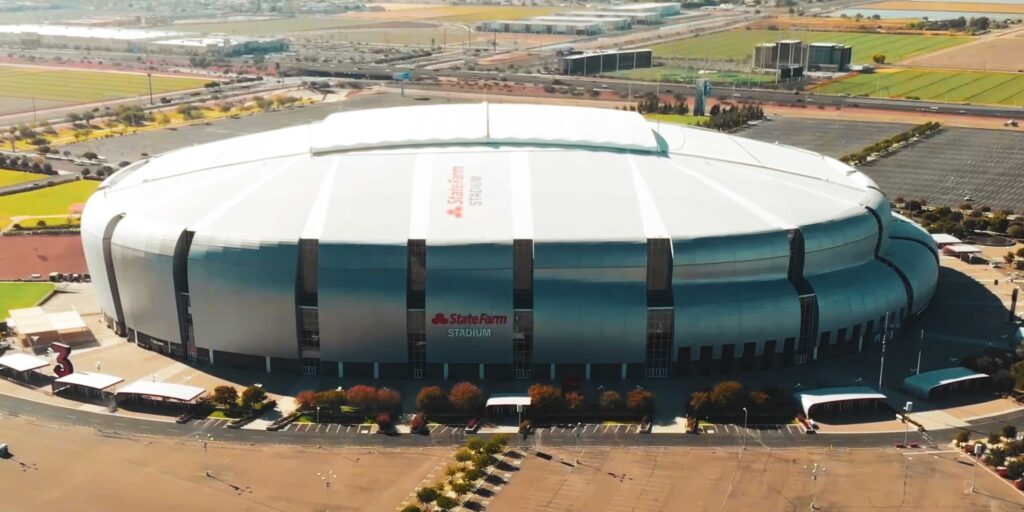
Arizona Cardinals Casitas
Ascension worked with the Arizona Cardinals on a custom-engineered solution for their premium seating experience.